I'm Officially a Computer Science Graduate
After four years, a fuzzy logic thesis, and a nerve-wracking defense day, I graduated from Informatics at Universitas Bhayangkara Jakarta Raya.
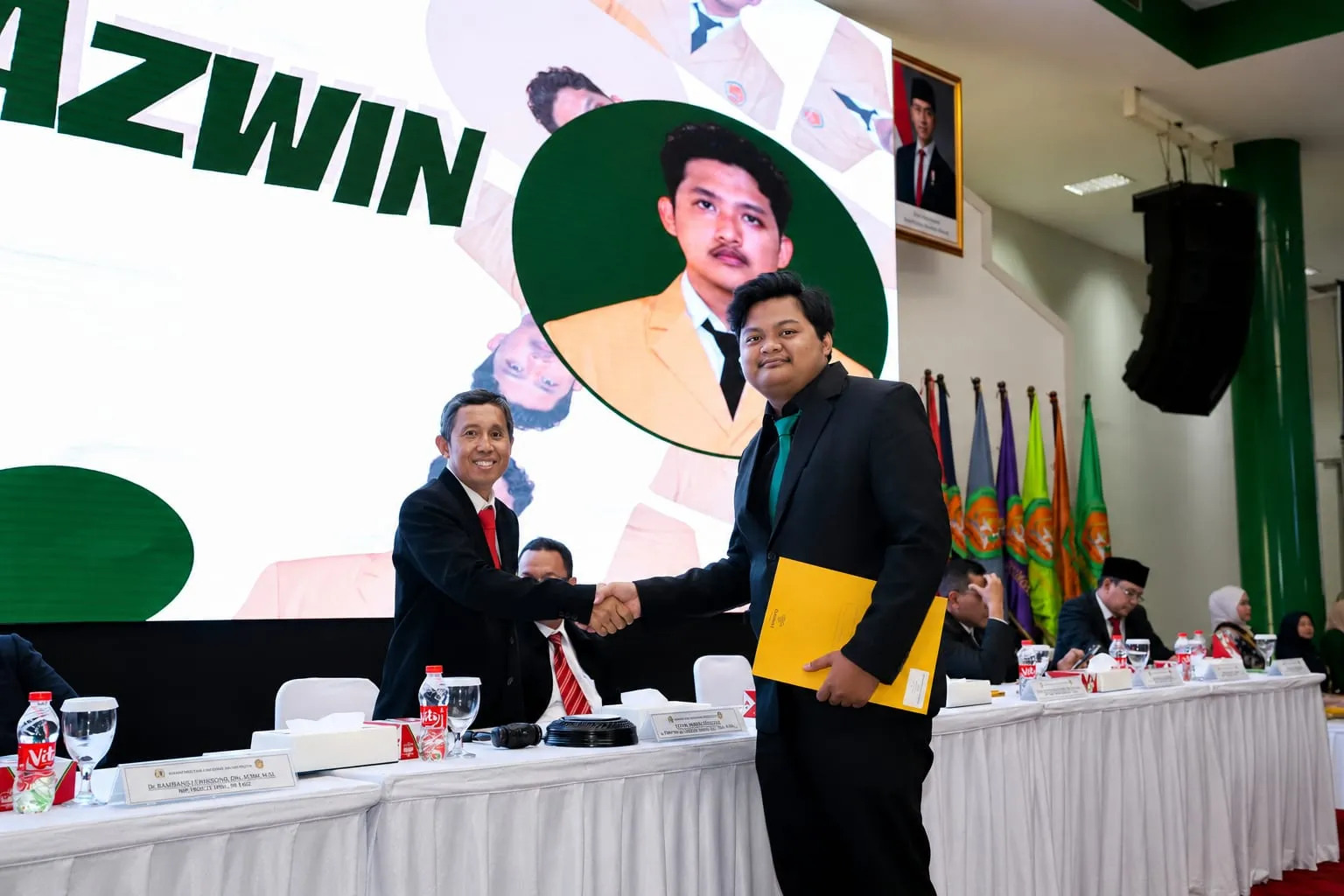
On July 23rd, I sat in front of three examiners and defended a thesis I’d spent four months building. A week later, on July 30th, it was official: I graduated from the Informatics program at the Faculty of Computer Science, Universitas Bhayangkara Jakarta Raya. Four years, condensed into one sentence on a certificate.
This post is the slightly longer version of that sentence.
The Long Way Here
I started this program back in 2022 not entirely sure what “Informatics” would turn into by the time I finished it. Along the way it turned into a lot of things - campus projects, capstones, all-nighters, and eventually a thesis that took over my last semester almost completely.
Some of that journey is already documented elsewhere on this site: Banq, a food-ordering app I helped design for a Developer Student Clubs challenge, and SweetAware, a diabetes-risk platform I helped build as a frontend developer for a DBS Foundation × Dicoding capstone. Both were team projects. The thesis was the opposite - just me, a problem, and a deadline.
The Thesis: Teaching a System to Judge Defects Fairly
My thesis was titled Implementasi Algoritma Fuzzy Logic untuk Penentuan Disposisi Produk Cacat pada Sistem Informasi Non-Conformance (NCR) - roughly, “Using Fuzzy Logic to decide what happens to defective products in a Non-Conformance Report system.” I built and researched it on-site at PT. Ohgishi Indonesia in Bekasi over about four months.
The problem itself was refreshingly non-abstract. The factory’s quality control process still ran on paper: when a product came off the line with a defect, an inspector filled out a form and decided, on the spot, whether it should be repaired, reworked, or scrapped. Different inspectors, looking at the same kind of scratch, would sometimes make different calls - one person’s “minor, just repair it” was another person’s “major, start over.”
So I built two things at once:
- A digital NCR system - a Flutter app with role-based dashboards for QC, QA, Production, and Managers, backed by Firebase for real-time sync and a Spring Boot service that generates audit-ready PDF reports.
- A Fuzzy Logic decision engine underneath it - evaluating Severity, Cost, and Availability across 27 expert-defined rules, then using Centroid of Area defuzzification to recommend a disposition. QA still has final say; the system just gives them a consistent starting point instead of a blank judgment call every time.
Testing it end-to-end - Black-box testing across the entire QC → QA → Production → Manager workflow - was oddly satisfying. Watching a status update on one phone instantly show up on another department’s dashboard never really got old, even after the hundredth time.
Defense Day
I won’t pretend defense day wasn’t nerve-wracking. Explaining a semester of decisions - why Fuzzy Logic over a simpler rule engine, why Flutter, why this exact rule base - to a panel that’s actively looking for the weak points in your reasoning is a genuinely different kind of pressure than shipping a feature and moving on.
My examiners - Ibu Dian Hartanti as chair, Ibu Khairunnisa Fadhilla Ramdhania, and Bapak Ahmad Fathurrozi - asked the questions I’d half-hoped they wouldn’t: what happens when the rule base itself is wrong, and how would this scale beyond one company’s quality standards. Good questions. The kind that make the “Limitations” section of a thesis feel less like a formality and more like an honest map of what to build next.
Thank You
None of this happened alone, even the “solo” thesis part. My supervisors, Ibu Dwipa Handayani and Bapak Ahmad Fathurrozi, spent months reading drafts and asking “but why” until the answers actually held up. My family - especially my parents and my sister, put up with a semester of me being mentally somewhere between a factory floor in Bekasi and a laptop screen. And the teams behind Banq and SweetAware taught me more about building real things with real constraints than any single course did.
What’s Next
For now: letting it sink in that the thing on my desk is actually a diploma and not another draft that needs revising. I’ll keep building - this site is proof of that - and I’m looking forward to whatever the next chapter of “Informatika” turns out to mean.